
Executive Summary
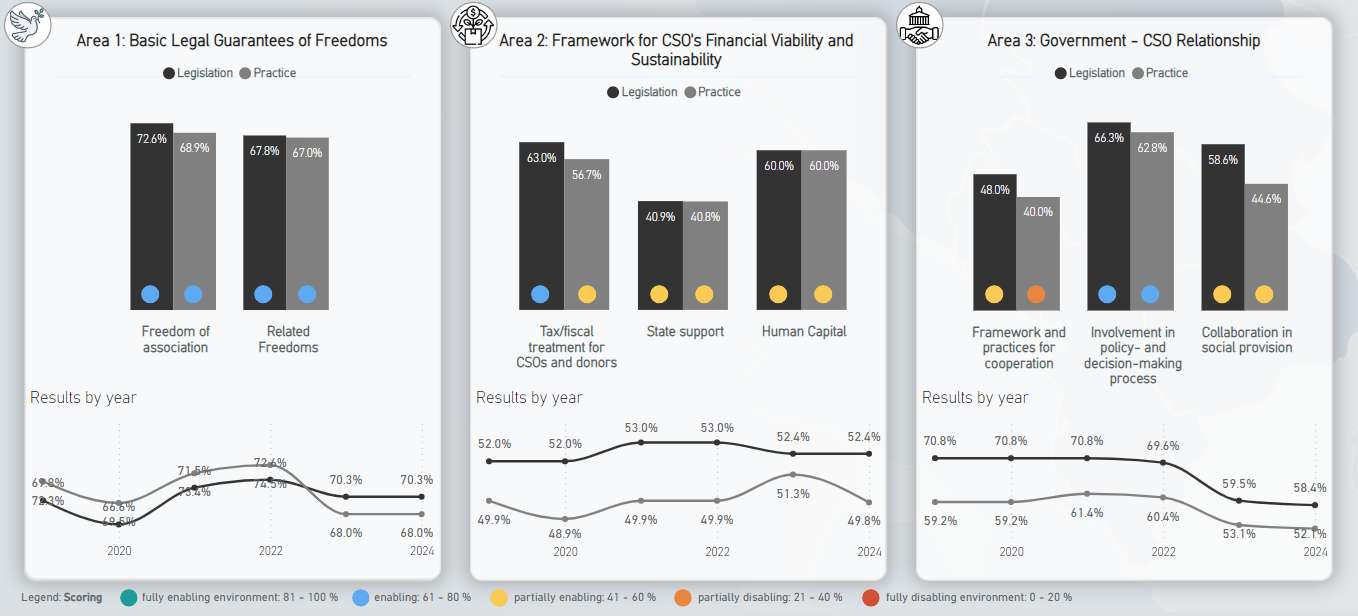
In 2024, civil society in North Macedonia continued to operate in a generally enabling legal environment, with fundamental rights such as freedom of association protected in both law and practice. Civil society organizations (CSOs) remained active and resilient across sectors. However, the year was marked by institutional stagnation, declining transparency, and a worsening climate for freedom of expression.
Read more
Freedom of association remained unrestricted, and CSOs were able to register and function without interference. Nevertheless, freedom of expression and civic engagement faced increasing threats, most notably a continued rise in Strategic Lawsuits Against Public Participation (SLAPPs). These lawsuits, coupled with reports of intimidation, digital surveillance, and fear of persecution, reflect a deteriorating environment for public discourse and advocacy.
The financial viability of CSOs remained one of the most pressing challenges. No progress was made in the long-promised reform of the state funding model. Public funding continues to be accessible only to a small number of organizations and remains insignificant as a source of income. The boycott of the Council for Cooperation with CSOs—still in place throughout 2024—highlighted the authorities’ failure to address the underfunding of the designated budget line (463) and underscored broader systemic deficiencies in institutional support for civil society. Similarly, despite the existence of a working group, no substantive developments were made to revise the Law on Donations and Sponsorships in Public Activities.
Access to policymaking deteriorated in 2024. Only 35 out of 101 legal drafts required to be opened for public consultation were published, a significant drop from previous years. Although formal consultation mechanisms such as the ENER platform exist, institutional responsiveness and meaningful inclusion of CSOs continued to decline. To strengthen government-CSO–CSO cooperation, key institutional mechanisms—such as the Council, the NGO Unit, and the public servants’ network—must be revized. The government should urgently reconstitute the Council to restore trust and ensure continuous dialogue.
CSO survey data painted a concerning picture: one-third of organizations were unable to obtain information they requested; 8% of respondents reported fear for their safety as activists; and a smaller but significant portion of CSOs faced harassment, censorship, or direct threats for their online and offline engagement.
Overall, while civil society in North Macedonia remained operational and active, the year 2024 was marked by political inertia, growing pressure on civic voices, and failure to deliver on key commitments for reform. To safeguard civic space and ensure democratic resilience, urgent action is needed to reinvigorate institutional dialogue, restore funding integrity, and protect public participation from legal and political intimidation.
Key Positive Developments for 2024
- CSOs in North Macedonia continue to operate in an enabling environment, although there are areas where improvement is needed. Freedom of association is guaranteed for all in legislation and exercised in practice without limitations, and with no reports of state interference in registration or operation processes.
- Despite the absence of reform, boycotts, and restricted funding, CSOs remained engaged, continued to advocate for reform, and participated in public debates, particularly around transparency and democratic participation.
Key Negative Developments for 2024
- The comprehensive reform of the framework for state funding for CSOs has not progressed at all in 2024. State funding continues to be almost a non-recognizable source of income for CSOs and only available for a limited number of organizations. The lack of available funding is a serious challenge for CSOs.
- The boycott by members of the Council remained in effect, serving as a clear indictment of the authorities’ and critic that throughout 2024 there was continued failure to reinstate standard budgetary allocations of the section 463 of the Budget. This underscores the systemic deficiencies in state–civil society relations and accentuates the pressing necessity for comprehensive reform of institutional support mechanisms for civil society organizations.
- The Government published only 35 out of 101 draft laws that were legally required to undergo public consultation, fulfilling just 35% of its transparency and participation obligations. This low compliance rate significantly undermines the ability of civil society organizations to engage meaningfully in the legislative process.
- According to a 2024 survey on access to public information, 70% of CSOs submitted information requests to government institutions. Of these, 33% reported that they did not receive a response within the legally prescribed timeframe, indicating a persistent gap between legal provisions and practical enforcement of the right to access public information.


