
Executive Summary
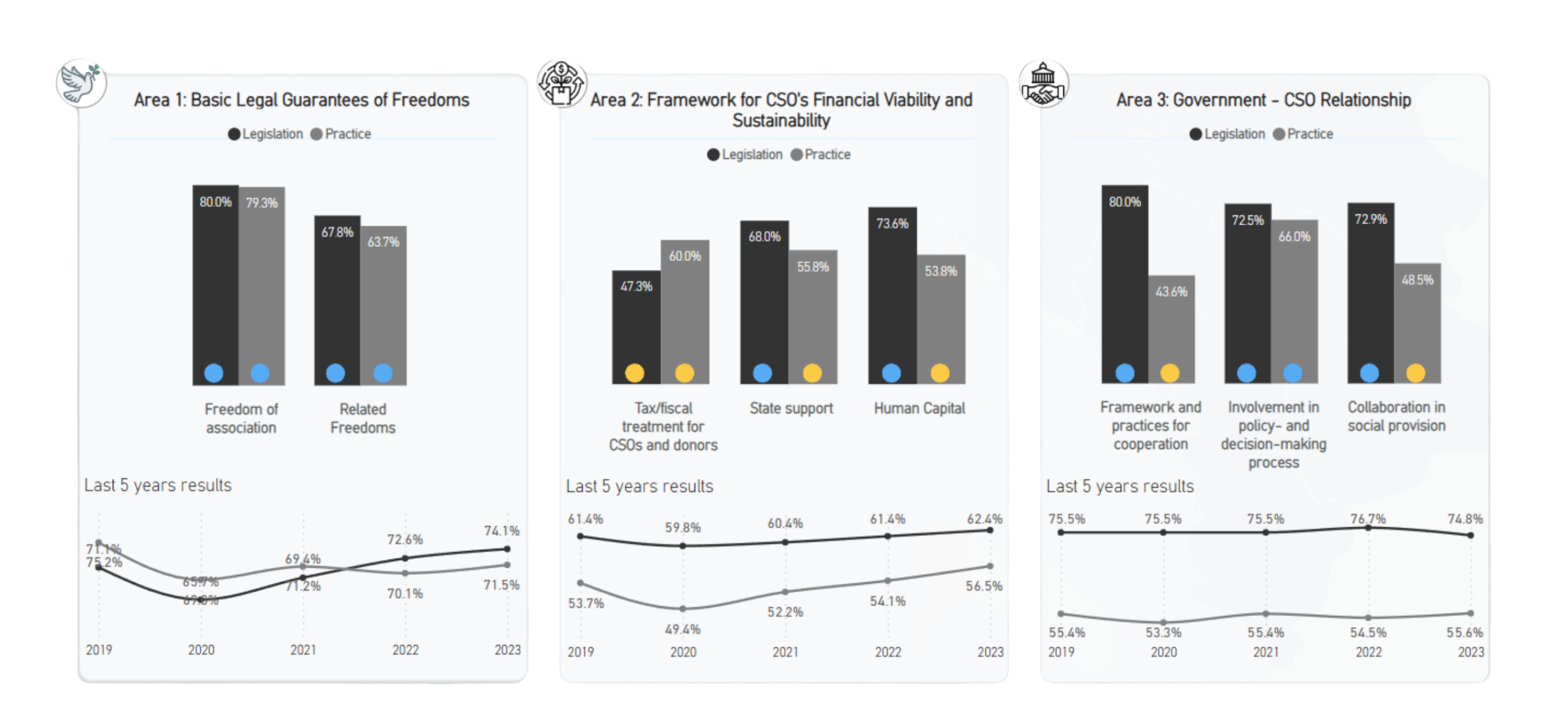
The overall environment for civil society organizations (CSOs) in North Macedonia is generally supportive, but there are areas needing improvement. The government should enhance its efforts to integrate civil society engagement into priority areas and consultation processes. CSOs should play a significant role in the reform agenda and be actively involved in decision-making processes.
Read more
Collaboration between civil society and the government during policymaking and law adoption processes is essential for the modern democratic process in North Macedonia. These interactions are crucial for fostering cooperation, dialogue, and trust between the government and civil society organizations. The Code of Good Practices for Civil Sector Participation in the Policy-Making Process outlines various forms of cooperation, including information sharing, consultation, dialogue, and partnership, throughout all stages of policymaking.
In North Macedonia, the environment for CSOs is generally positive, but there are still key areas for growth. The government could strengthen its integration of civil society by making engagement in priority areas and consultation processes more systematic. For meaningful progress, CSOs need to be central to the reform agenda and actively participate in decision-making processes. The General Secretariat of the Government, through its unit for cooperation with civil society organizations, distributed the questionnaire to ministries via the Network of Civil Servants for Cooperation with Civil Society. Legal and financial frameworks require amendments and practical implementation, especially to establish consistent mechanisms for allocating public funding to CSOs. Resuming the activities of the Council for Cooperation between the Government and Civil Society is crucial to fostering dialogue and collaboration between these sectors.
In summary, while the operating environment for CSOs in North Macedonia has positive aspects, there are clear opportunities for improvement, particularly in legal and financial frameworks and institutional mechanisms for collaboration between the government and civil society.
Key Positive Developments for 2023
- Amendments to the Criminal Code in North Macedonia enhanced the safety of
journalists and media workers by treating threats and attacks against them as
offenses against public officials. - CSOs in North Macedonia continue to operate in an enabling environment, but there are areas where improvement is needed. Freedom of association is guaranteed for all in legislation and exercised in practice without limitations.
- In 2023, 51.4% of draft laws were published on the Unique National Electronic Register of Regulations, marking an improvement over the previous years. This compares to 37% in 2022, 41% in 2021, and 49% in 2019.
Key Negative Developments for 2023
- The comprehensive reform of the framework for state funding for CSOs has not progressed at all. State funding continues to be almost a non-recognizable source of income for CSOs and only available for a limited number of organizations. The lack of available funding is a serious challenge for CSOs.
- The boycott by the members of the Council continues to be in force and emphasizes the authorities’ failure to restore standard allocations for state funding in the annual program for cooperation with the civil sector. This underscores the challenges in maintaining effective collaboration between the government and civil society and emphasizes the need for improvements in the support mechanisms for CSOs.
- In 2023, there has been no progress regarding the Law on Donations and Sponsorships in Public Activities, despite initial plans for updating this law in collaboration with CSOs. Although there is an active working group within the Ministry of Justice dedicated to this matter, there was no significant advancement during the year.
- The government did not enhance its efforts to incorporate civil society engagement into priority areas and consultation processes.


