
Executive Summary
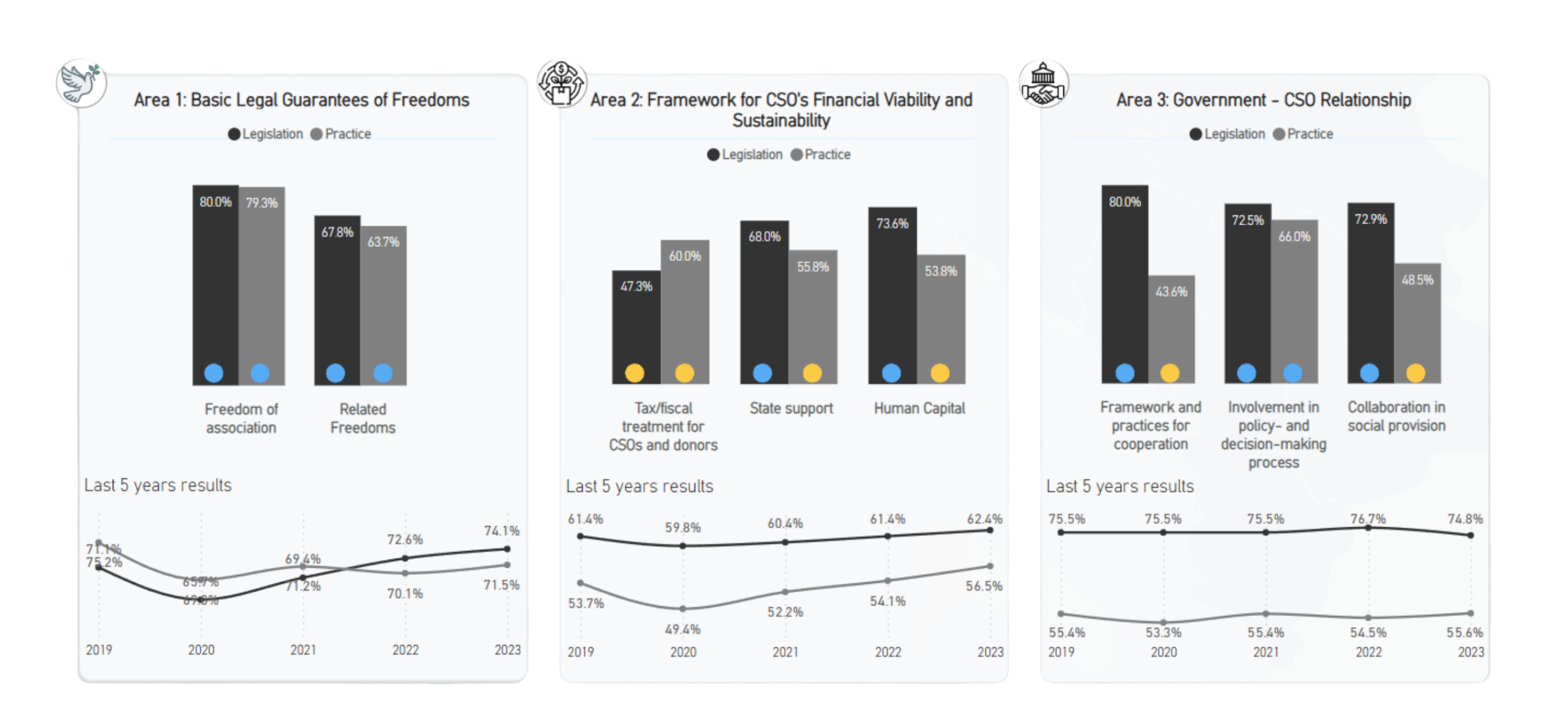
Albania’s civil society landscape in 2023 presents a dual reality where fundamental legal freedoms are guaranteed, yet practical and systemic issues significantly impede the operations and influence of Non-Profit Organizations (NPOs). A major setback is the non-functional electronic registry for NPOs, which was mandated to be operational by December 2023, causing a lack of transparency and hindering essential sector processes. Despite intentions to simplify, a new VAT exemption instruction for foreign-funded projects has ironically increased administrative burdens and costs for NPOs, making it difficult for them to realize the intended benefits.
Read more
Progress on the government’s Civil Society Road Map has stalled, and the Partnership Platform for EU Integration remains incomplete, severely limiting civil society engagement in policy-making and the EU accession process. NPO registration procedures are consistently cumbersome and time-consuming, and a notable decline in actively functioning NPOs has been observed. Furthermore, many NPOs face significant hurdles in accessing banking services due to stringent due diligence requirements, and public funding remains inadequate, leaving them heavily reliant on foreign sources.
There’s a growing concern over Strategic Lawsuits Against Public Participation (SLAPPs) aimed at silencing journalists and environmental NPOs, and a decline in global press freedom indices points to ongoing pressures on freedom of expression, including restricted media access during public assemblies. Despite these challenges, Albania boasts strong legal guarantees for freedom of association, and NPOs generally report minimal state interference. Positive developments include the relaxation of anti-money laundering regulations for NPOs, a low assessed risk of terrorist financing in the sector, and constitutional safeguards for peaceful assembly and cybersecurity.
Overall, while a supportive legal framework exists, the effective functioning and contribution of NPOs are significantly hampered by administrative inefficiencies, a lack of consistent engagement mechanisms, and insufficient domestic support, highlighting the urgent need for comprehensive reforms to foster a genuinely enabling environment.
Key Positive Developments for 2023
The 2023 National Risk Assessment in Albania indicates a low risk of terrorism financing in the non-profit sector, which should facilitate the adoption of a risk-based approach, ultimately leading to the declassification of CSOs as ‘high-risk’ in the realm of money laundering & terrorist financing.
Key Negative Developments for 2023
- The electronic registry, intended to be operational by December 30, 2023, as mandated by Law No. 80/2021 and the decision of the High Judicial Council, is not yet functional. This delay in establishing the NPO registry has become a significant hindrance and poses a major obstacle to NPOs’ operations, as sector-specific processes depend on access to the registry.
- The introduction of Instruction No. 27/2023, which establishes a zero per cent VAT rate for projects funded by foreign donations or grants in Albania, has inadvertently created significant operational and administrative challenges for NPOs. Despite the intention, the new requirements, such as VAT registration for NPOs, extensive procedures for every purchase, and logistical complications, are increasing administrative burdens. This has made it difficult for NPOs to benefit from the zero per cent VAT rate, leading to higher costs and hindering the sector’s operations.
- In 2023, no progress was reported by public institutions regarding the implementation of The Road Map for the Government Policy towards a More Enabling Environment for Civil Society Development 2019-2023. The absence of a central policy coordination institution has led to insufficient systematic monitoring, reporting, and limited dialogue with NPOs.
- The Partnership Platform for European Integration has not yet fulfilled its intended role of informing, consulting, and engaging civil society in the EU accession negotiation process. The platform remains incomplete, with only 26 of the 33 required discussion and consultation tables established. Without the full establishment of all 33 tables, the platform cannot function as intended, and the Governing Board cannot be formed.


